Unlock Your Potential: The Ultimate Guide to CrossFit Training for Beginners

webmaster

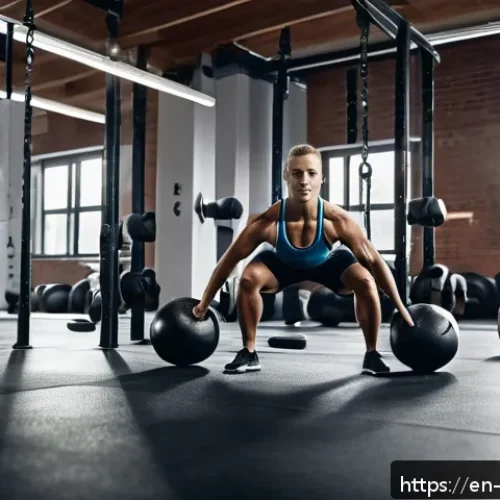
크로스핏 훈련 - **Prompt:** A determined woman in her late 20s, wearing athletic apparel (sports bra and shorts), is...

Tired of the same old gym routine that just isn’t cutting it anymore? Ever wondered if there’s a workout out there that truly pushes your limits, physically and mentally, while connecting you with an amazing, supportive community?

크로스핏 훈련 관련 이미지 1

CrossFit often gets a bad rap for being super intense or only for elite athletes, and honestly, I completely get why some might feel that way. I remember initially thinking it looked incredibly intimidating myself, like something only superheroes attempted!

But what I’ve discovered, and what countless others have experienced, is a fitness journey that’s far more transformative and accessible than you might imagine.

It’s not just about lifting heavy or doing crazy WODs; it’s about building functional strength, boosting your endurance, and finding a supportive group of people who celebrate every single win with you, no matter how small.

We’ve seen such an exciting evolution in CrossFit lately, with a much greater focus on sustainable fitness and individual scaling options, truly making it a fantastic path for anyone looking to seriously level up their health, regardless of their starting point.

It’s a journey of self-discovery, pushing past what you thought were your limits. Ready to challenge your own perceptions and unlock a whole new level of strength, confidence, and vibrant energy?

Let’s get into the nitty-gritty and discover exactly how CrossFit training can empower you to achieve your fitness goals.

Unlocking Your Inner Athlete: Demystifying CrossFit’s Core Principles

CrossFit isn’t just about random exercises thrown together; it’s built upon a foundation of core principles designed to maximize your fitness potential.

What I’ve found is that understanding these principles can really help you appreciate the method behind the madness and tailor your approach for the best results.

The Emphasis on Functional Movements

Forget isolating muscles with endless bicep curls! CrossFit focuses on functional movements, which are exercises that mimic everyday activities like lifting, pushing, pulling, and squatting.

Think about it – you’re not just building strength; you’re building strength that directly translates to making your life easier and more efficient. Whether it’s hauling groceries, playing with your kids, or just moving with more confidence and ease, functional movements have you covered.

From my own experience, I noticed a huge difference in how easily I could handle tasks that used to leave me feeling drained.

The Power of Constantly Varied Workouts

Boredom is the enemy of progress! CrossFit keeps things fresh and engaging with constantly varied workouts. This means you’re not stuck doing the same routine week after week.

This variety keeps your body guessing, prevents plateaus, and challenges you in new and exciting ways. I used to dread going to the gym because it felt so monotonous, but with CrossFit, I’m always looking forward to seeing what the WOD (Workout of the Day) will bring.

The surprise element keeps me motivated and excited to push myself.

Mastering the Key Exercises: Your CrossFit Toolkit

While the specific workouts change daily, there are some fundamental exercises that form the backbone of CrossFit. These movements are incredibly effective for building strength, power, and overall fitness.

The key is to learn them with proper form and gradually increase the intensity as you get stronger.

The Squat Family: Your Foundation for Strength

Squats are king (or queen!) in CrossFit, and for good reason. They work your entire lower body, build core strength, and improve your overall mobility.

You’ll encounter variations like the back squat, front squat, overhead squat, and air squat. Each variation targets different muscle groups and challenges your stability in unique ways.

When I first started, even air squats felt tough, but with consistent practice, I was amazed at how quickly I progressed to weighted squats.

The Pressing Power: Shoulder Press and Push Press

Overhead pressing movements, like the shoulder press and push press, are essential for upper body strength and stability. These exercises not only build strong shoulders and triceps but also engage your core and improve your posture.

The shoulder press requires strict form and controlled movement, while the push press allows you to use your legs for a little extra momentum. I’ve personally found that incorporating these exercises into my routine has significantly improved my shoulder stability and reduced nagging aches and pains.

Deadlifts: The Ultimate Full-Body Exercise

If there’s one exercise that screams “power,” it’s the deadlift. This movement engages nearly every muscle in your body, from your legs and glutes to your back and core.

It’s fantastic for building overall strength, improving posture, and boosting your confidence. Learning the proper deadlift form is crucial to avoid injury, so it’s worth investing time in perfecting your technique with a qualified coach.

Advertisement

Scaling for Success: Adapting CrossFit to Your Fitness Level

One of the biggest misconceptions about CrossFit is that it’s only for super-fit athletes. The truth is, CrossFit is designed to be scalable, meaning that every workout can be modified to suit your individual fitness level and abilities.

Whether you’re a complete beginner or a seasoned athlete, there’s a way to make CrossFit work for you.

Modifying Movements: Finding Your Starting Point

If a particular exercise feels too challenging, don’t be afraid to modify it. For example, if you can’t do a full pull-up, you can use an assisted pull-up machine or do ring rows instead.

If you have knee problems, you can modify squats by reducing the depth or using a box to sit on. The key is to focus on maintaining proper form and gradually increasing the intensity as you get stronger.

Remember, it’s about progress, not perfection.

Adjusting Weight and Repetitions: Tailoring the Intensity

Another way to scale CrossFit workouts is by adjusting the weight and repetitions. If a workout calls for a weight that’s too heavy, simply reduce it to something that feels manageable.

Similarly, if you can’t complete all the repetitions, scale them down to a number that you can handle with good form. It’s better to do fewer reps with proper technique than to struggle through with poor form and risk injury.

The Community Factor: Why CrossFit is More Than Just a Workout

Beyond the physical benefits, one of the most appealing aspects of CrossFit is the strong sense of community. CrossFit gyms, often called “boxes,” are known for their supportive and encouraging atmosphere.

You’re not just another face in the crowd; you’re part of a tribe that celebrates each other’s successes and pushes each other to be their best.

Finding Your Tribe: The Power of Shared Goals

Working out alongside like-minded individuals can be incredibly motivating. In a CrossFit box, you’ll find people of all ages, shapes, and fitness levels, all united by a common goal: to improve their health and well-being.

This shared sense of purpose creates a powerful bond and fosters a sense of camaraderie that’s hard to find in a traditional gym setting. I’ve made some of my closest friends through CrossFit, and they’ve been an incredible source of support and encouragement.

Celebrating Successes: Big and Small

In CrossFit, every achievement is celebrated, no matter how small. Whether it’s getting your first pull-up, lifting a new personal best, or simply showing up for a workout when you’re feeling tired, your fellow CrossFitters will be there to cheer you on.

This positive reinforcement can make a huge difference in your motivation and help you stay committed to your fitness goals. The energy in a CrossFit box is infectious, and it’s what keeps me coming back day after day.

Advertisement

Tracking Your Progress: Measuring Your CrossFit Journey

To truly appreciate the benefits of CrossFit, it’s important to track your progress. This allows you to see how far you’ve come, identify areas for improvement, and stay motivated along the way.

There are several ways to track your CrossFit journey, from simple notebooks to sophisticated apps.

The Power of the Workout Log

Keeping a workout log is one of the simplest and most effective ways to track your progress. Simply write down the workouts you do, the weights you lift, and any other relevant information, such as your times or scores.

Over time, you’ll be able to see how your strength and endurance are improving. I personally use a spreadsheet to track my workouts, and it’s incredibly rewarding to see how my numbers have improved over time.

Using Technology to Monitor Your Performance

There are also a number of apps and wearable devices that can help you track your CrossFit performance. These tools can monitor your heart rate, track your movements, and provide valuable insights into your fitness levels.

Some apps even allow you to compare your scores with other CrossFitters, adding a competitive element to your workouts. Here’s a table summarizing the key aspects of CrossFit:

Aspect Description Benefits
Functional Movements Exercises that mimic everyday activities Improved strength, mobility, and ease of daily tasks
Varied Workouts Constantly changing routines Prevents boredom, avoids plateaus, and challenges your body
Scaling Modifying workouts to suit individual fitness levels Makes CrossFit accessible to everyone, regardless of ability
Community Supportive and encouraging environment Motivation, camaraderie, and accountability
Progress Tracking Monitoring your performance over time Motivation, insights, and a sense of accomplishment

Fueling Your Body: Nutrition for CrossFitters

CrossFit isn’t just about working hard in the gym; it’s also about fueling your body with the right nutrients. A balanced diet that supports your training can significantly enhance your performance and recovery.

While there’s no one-size-fits-all approach to nutrition, there are some general guidelines that can help you optimize your results.

Prioritizing Whole Foods

Focus on eating whole, unprocessed foods as much as possible. This means filling your plate with lean protein, complex carbohydrates, and healthy fats.

Good sources of protein include chicken, fish, beef, and beans. Complex carbohydrates can be found in vegetables, fruits, and whole grains. Healthy fats are abundant in avocados, nuts, seeds, and olive oil.

I’ve found that when I prioritize whole foods, I have more energy, recover faster, and feel better overall.

Hydration is Key

Staying properly hydrated is crucial for performance and recovery. Aim to drink plenty of water throughout the day, especially before, during, and after your workouts.

Dehydration can lead to fatigue, muscle cramps, and decreased performance. A good rule of thumb is to drink enough water so that your urine is pale yellow or clear.

Alright, let’s craft a blog post that captures the essence of CrossFit for a beginner audience, focusing on its core principles, key exercises, scalability, community, progress tracking, and nutrition.

Here’s how to unlock your inner athlete:

Advertisement

Unlocking Your Inner Athlete: Demystifying CrossFit’s Core Principles

CrossFit isn’t just a collection of random exercises; it’s a fitness methodology built upon core principles that can maximize your fitness potential. Understanding these principles allows you to appreciate the method behind the madness and tailor your approach for the best results.

The Emphasis on Functional Movements

Forget endless bicep curls in isolation! CrossFit concentrates on functional movements. These are exercises mirroring everyday actions like lifting, pushing, pulling, and squatting.

You’re not just building strength; you’re building strength that directly translates into an easier and more efficient daily life. Whether hauling groceries, playing with kids, or moving confidently, functional movements have you covered.

Personally, I’ve noticed a huge difference in handling tasks that used to drain me.

Advertisement

크로스핏 훈련 관련 이미지 2

The Power of Constantly Varied Workouts

Boredom is progress’s enemy! CrossFit keeps things fresh and engaging with constantly varied workouts. You’re not stuck in the same routine week after week.

This variety keeps your body guessing, prevents plateaus, and challenges you in new and exciting ways. I used to dread the gym because it was monotonous.

With CrossFit, I anticipate the WOD (Workout of the Day). The surprise motivates me to push myself.

Mastering the Key Exercises: Your CrossFit Toolkit

While specific workouts change daily, some fundamental exercises form CrossFit’s backbone. These movements effectively build strength, power, and overall fitness.

Learn them with proper form, gradually increasing intensity as you get stronger.

Advertisement

The Squat Family: Your Foundation for Strength

Squats reign supreme in CrossFit for good reason. They work the entire lower body, build core strength, and improve mobility. You’ll encounter variations like the back squat, front squat, overhead squat, and air squat.

Each targets different muscles and challenges stability uniquely. When I started, even air squats felt tough, but with consistent practice, I quickly progressed to weighted squats.

The Pressing Power: Shoulder Press and Push Press

Overhead pressing movements, like the shoulder press and push press, are essential for upper body strength and stability. These exercises build strong shoulders and triceps, engaging your core and improving posture.

The shoulder press requires strict form and controlled movement, while the push press allows using your legs for momentum. Incorporating these exercises has improved my shoulder stability and reduced aches.

Advertisement

Deadlifts: The Ultimate Full-Body Exercise

If an exercise screams “power,” it’s the deadlift. This movement engages nearly every muscle, from legs and glutes to back and core. It’s fantastic for building overall strength, improving posture, and boosting confidence.

Learning proper deadlift form is crucial to avoid injury, so invest time perfecting technique with a qualified coach.

Scaling for Success: Adapting CrossFit to Your Fitness Level

One of the biggest misconceptions is that CrossFit is only for super-fit athletes. The truth is, CrossFit is designed to be scalable. Every workout can be modified to suit individual fitness levels and abilities.

Whether you’re a beginner or seasoned athlete, there’s a way to make CrossFit work for you.

Advertisement

Modifying Movements: Finding Your Starting Point

If an exercise feels too challenging, modify it. For example, if you can’t do a full pull-up, use an assisted pull-up machine or do ring rows instead.

If you have knee problems, modify squats by reducing the depth or using a box to sit on. Focus on maintaining proper form and gradually increasing intensity as you get stronger.

Remember, it’s about progress, not perfection.

Adjusting Weight and Repetitions: Tailoring the Intensity

Another way to scale CrossFit workouts is by adjusting weight and repetitions. If a workout calls for a weight that’s too heavy, reduce it to something manageable.

Similarly, if you can’t complete all repetitions, scale them down to a number you can handle with good form. It’s better to do fewer reps with proper technique than struggle with poor form and risk injury.

Advertisement

The Community Factor: Why CrossFit is More Than Just a Workout

Beyond physical benefits, one of CrossFit’s most appealing aspects is the strong sense of community. CrossFit gyms, often called “boxes,” are known for their supportive and encouraging atmosphere.

You’re not just another face; you’re part of a tribe that celebrates each other’s successes and pushes each other to be their best.

Finding Your Tribe: The Power of Shared Goals

Working out alongside like-minded individuals can be incredibly motivating. In a CrossFit box, you’ll find people of all ages, shapes, and fitness levels, united by a common goal: to improve health and well-being.

This shared sense of purpose creates a powerful bond and fosters camaraderie that’s hard to find in a traditional gym. I’ve made some of my closest friends through CrossFit, and they’ve been an incredible source of support.

Advertisement

Celebrating Successes: Big and Small

In CrossFit, every achievement is celebrated, no matter how small. Whether it’s getting your first pull-up, lifting a new personal best, or simply showing up for a workout, your fellow CrossFitters will cheer you on.

This positive reinforcement can make a huge difference in motivation and help you stay committed to your fitness goals. The energy in a CrossFit box is infectious and keeps me coming back.

Tracking Your Progress: Measuring Your CrossFit Journey

To truly appreciate CrossFit’s benefits, it’s important to track your progress. This allows you to see how far you’ve come, identify areas for improvement, and stay motivated.

There are several ways to track your CrossFit journey, from notebooks to apps.

The Power of the Workout Log

Keeping a workout log is one of the simplest and most effective ways to track progress. Write down the workouts, the weights lifted, and any other relevant information, such as times or scores.

Over time, you’ll be able to see how strength and endurance improve. I use a spreadsheet to track my workouts, and it’s rewarding to see how my numbers have improved.

Using Technology to Monitor Your Performance

A number of apps and wearable devices can help you track your CrossFit performance. These tools can monitor heart rate, track movements, and provide insights into fitness levels.

Some apps allow you to compare scores with other CrossFitters, adding a competitive element. Here’s a table summarizing key aspects of CrossFit:| Aspect | Description | Benefits |
| ——————– | ————————————————- | ———————————————————————— |
| Functional Movements | Exercises that mimic everyday activities | Improved strength, mobility, and ease of daily tasks |
| Varied Workouts | Constantly changing routines | Prevents boredom, avoids plateaus, and challenges your body |
| Scaling | Modifying workouts to suit individual fitness levels | Makes CrossFit accessible to everyone, regardless of ability |
| Community | Supportive and encouraging environment | Motivation, camaraderie, and accountability |
| Progress Tracking | Monitoring your performance over time | Motivation, insights, and a sense of accomplishment |

Fueling Your Body: Nutrition for CrossFitters

CrossFit isn’t just about working hard in the gym; it’s also about fueling your body with the right nutrients. A balanced diet that supports training can significantly enhance performance and recovery.

While there’s no one-size-fits-all approach, some general guidelines can help optimize results.

Prioritizing Whole Foods

Focus on eating whole, unprocessed foods. Fill your plate with lean protein, complex carbohydrates, and healthy fats. Good protein sources include chicken, fish, beef, and beans.

Complex carbohydrates can be found in vegetables, fruits, and whole grains. Healthy fats are abundant in avocados, nuts, seeds, and olive oil. I’ve found that when I prioritize whole foods, I have more energy, recover faster, and feel better.

Hydration is Key

Staying properly hydrated is crucial for performance and recovery. Aim to drink plenty of water throughout the day, especially before, during, and after workouts.

Dehydration can lead to fatigue, muscle cramps, and decreased performance. A good rule of thumb is to drink enough water so that your urine is pale yellow or clear.

Wrapping Up

CrossFit offers a comprehensive approach to fitness, blending challenging workouts with a supportive community. By understanding its core principles, scaling workouts to your level, tracking progress, and prioritizing nutrition, you can unlock your inner athlete and achieve your fitness goals.

Good to Know Information

Here are some useful tips to keep in mind as you embark on your CrossFit journey:1. Master the Basics: Focus on perfecting fundamental movements like squats, presses, and deadlifts before attempting more complex exercises.

2. Listen to Your Body: Pay attention to any pain or discomfort, and don’t hesitate to modify workouts as needed. 3.

Find a Good Coach: A qualified CrossFit coach can provide personalized guidance and ensure you’re performing exercises safely and effectively. 4. Embrace the Community: Get involved in your local CrossFit community for support, motivation, and camaraderie.

5. Track Your Nutrition: Keep a food log to monitor your calorie intake and macronutrient balance, and make adjustments as needed to support your training.

Key Takeaways

* CrossFit combines functional movements, varied workouts, and a supportive community. * Workouts can be scaled to suit all fitness levels. * Tracking your progress and prioritizing nutrition are essential for achieving your goals.

* The community aspect provides motivation and accountability. * CrossFit is more than just a workout; it’s a lifestyle.

Frequently Asked Questions (FAQ) 📖

Q: Is CrossFit really only for elite athletes or super intense people? I’m worried it’s too intimidating for someone like me.

A: Oh, I totally get where you’re coming from! When I first saw a CrossFit competition, I honestly thought it looked like something out of a superhero movie, and I remember feeling pretty intimidated, like, “There’s no way I could ever do that.” But what I’ve discovered, and what truly makes CrossFit so special, is that it’s designed for everyone, regardless of your current fitness level.
It’s not about being the strongest or the fastest right from the start. It’s about showing up, trying your best, and learning to scale every single movement to suit your abilities.
Think about it – if the workout calls for pull-ups, and you’re not there yet, your coach will guide you through band-assisted pull-ups, ring rows, or even just working on the foundational strength for them.
The beauty is in the modification! I’ve seen grandmas, teenagers, competitive athletes, and people who are just starting their fitness journey all doing the same workout, just tailored to their individual needs.
The intensity is what you make it, and the coaches are fantastic at ensuring you’re challenged but safe. Trust me, the community is incredibly supportive, and you’ll find yourself celebrating every small victory alongside people from all walks of life.
It’s far more accessible and welcoming than it looks from the outside, and I promise you, once you step into a “box” (that’s what we call a CrossFit gym!), you’ll feel that apprehension melt away.

Q: Beyond just getting strong, what are the actual benefits I can expect from doing CrossFit?

A: That’s a brilliant question, because CrossFit offers so much more than just physical strength, though you’ll definitely get stronger, that’s for sure!
From my own experience, and seeing countless others transform, the benefits ripple out into every part of your life. For starters, you’ll notice a significant boost in your cardiovascular endurance – those once-dreaded stairs become a breeze!
Your mobility and flexibility will also improve dramatically, which is crucial for overall health and injury prevention. But honestly, the biggest gains often happen mentally.
You develop incredible mental toughness and resilience. Pushing through a challenging workout teaches you to overcome obstacles, manage discomfort, and discover a grit you never knew you had.
That confidence absolutely spills over into your daily life, making you feel more capable and empowered in everything you do. Plus, the functional fitness aspect is huge; you’ll find everyday tasks like lifting groceries, playing with your kids, or moving furniture become remarkably easier.
And let’s not forget the community! It’s truly a built-in support system that pushes you, celebrates you, and makes working out genuinely fun. It’s not just about a better body; it’s about a more resilient mind, a more capable you, and a vibrant, supportive social circle.
I personally feel more energized, more confident, and just generally happier since I started, and I know so many others who feel the exact same way.

Q: I’m a complete beginner, and I’m a bit scared to jump in. How can I start CrossFit safely and effectively without getting injured or feeling completely overwhelmed?

A: I completely understand that feeling of being a bit scared to take the plunge, especially when you’re just starting out. The best way to begin CrossFit safely and effectively is to find a reputable “box” (CrossFit gym) in your area that offers an “On-Ramp” or “Foundations” program.
This is absolutely crucial! These programs are specifically designed for beginners and will teach you all the fundamental movements – like squatting, lifting, and gymnastics basics – with a strong emphasis on proper form and technique before you even join the regular classes.
You’ll learn how to scale workouts appropriately and understand the methodology behind CrossFit in a controlled, supportive environment. When you’re looking for a gym, don’t be afraid to visit a few, meet the coaches, and ask questions about their beginner programs and coaching qualifications.
A good coach will prioritize your safety and proper mechanics above all else. Once you start, remember these golden rules: always listen to your body, leave your ego at the door, and focus on mastering the movement before adding heavy weight or speed.
It’s a journey, not a race! The coaches are there to guide you, and the community will cheer you on every step of the way. I promise, by taking it slow and focusing on those foundational steps, you’ll build an incredibly strong base, boost your confidence, and minimize any risk of injury, setting yourself up for a truly rewarding fitness adventure.